
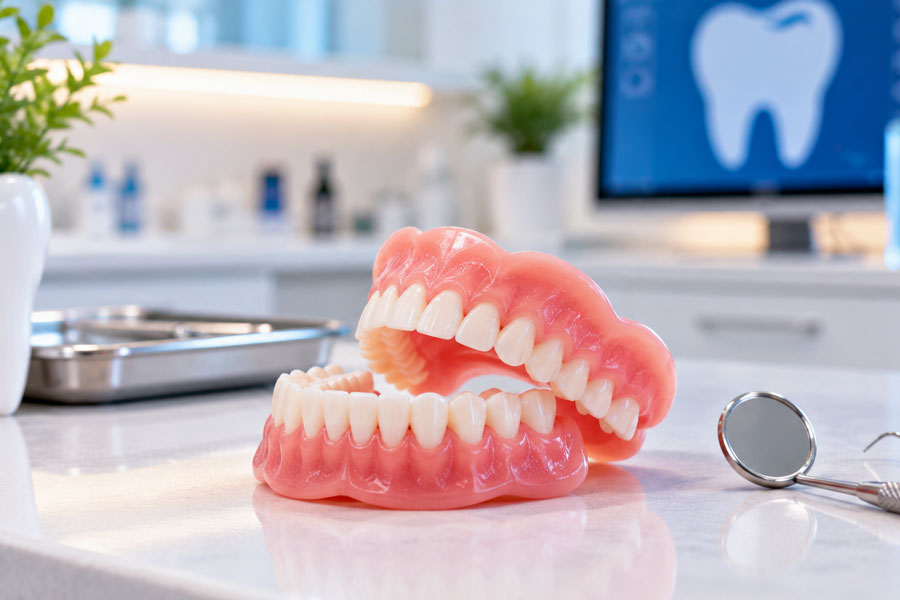
Missing teeth can affect your ability to eat comfortably, speak clearly and feel confident about your smile. Dentures provide a removable tooth replacement option for people who have lost several teeth or all of their natural teeth.
At Wise Dental, dentures can be individually designed to suit your mouth, bite and remaining teeth. The aim is to restore everyday function while creating a natural-looking replacement that feels as comfortable and secure as possible.
Whether you require a full denture, partial denture or replacement for an existing appliance, we’ll assess your oral health and discuss the options available.
Dentures are removable dental appliances used to replace missing teeth and surrounding tissues.
Unlike dental implants or fixed bridges, dentures can be taken out for cleaning and care. They are individually made to fit the shape of your mouth and can replace anything from several missing teeth to an entire upper or lower arch.
Modern dentures are designed with consideration for both function and appearance, including the shape, size and colour of the replacement teeth.
The type of denture recommended will depend on how many teeth you’re missing, the condition of your remaining teeth and your individual oral health.
Full or complete dentures are used when all of the natural teeth in the upper jaw, lower jaw or both arches are missing.
The denture contains a complete set of replacement teeth supported by a gum-coloured base designed to sit against the tissues of the mouth. The fit is individually planned according to the shape of your gums and jaw.
A partial denture can be used when some healthy natural teeth remain. The appliance fills the spaces created by missing teeth while working alongside the teeth you still have.
Depending on its design, a partial denture may use clasps or other components to help keep it securely positioned. Replacing missing teeth can also help prevent some of the functional problems associated with larger gaps within the smile.
In some circumstances, a denture can be prepared before teeth are removed and placed soon after the extraction procedure. Known as an immediate denture, this approach allows replacement teeth to be available during the initial healing period.
However, the gums and jawbone naturally change shape as extraction sites heal. An immediate denture may therefore require adjustments, relining or eventual replacement to maintain an appropriate fit.
Dentures can be constructed using different dental materials depending on the type of appliance required.
Acrylic is commonly used to create the gum-coloured base and replacement teeth, while some partial dentures incorporate a metal framework for additional support.
The material recommended will depend on factors such as the number and location of missing teeth, your bite and the design of the denture.
Your dentist can explain the available options and their respective advantages when planning your treatment.
For suitable patients, dentures can restore both appearance and everyday dental function following tooth loss. Potential benefits include:
How well a denture functions will depend on factors including its fit, your oral anatomy and the number and condition of any remaining natural teeth.
Creating a denture generally involves several stages to achieve an appropriate fit, bite and appearance.
Your dentist will first examine your teeth, gums and mouth.
If natural teeth remain, their condition will also be assessed to determine whether they can provide support for a partial denture or require treatment beforehand.
Detailed impressions or digital records are taken to capture the shape of your gums, jaw and remaining teeth.
These measurements provide the information required to design an appliance specifically for your mouth.
The relationship between your upper and lower jaws needs to be recorded so the replacement teeth can be positioned appropriately.
The size, shape and shade of the artificial teeth can also be selected with consideration for your appearance and existing natural teeth.
Once the denture has been produced, your dentist checks the fit, bite and appearance. Adjustments can be made where necessary to improve comfort and function.
Further appointments may occasionally be needed as you become accustomed to wearing your new denture.
New dentures can feel unfamiliar at first, particularly if you’ve never worn a removable dental appliance before.
Eating and speaking may require some adjustment while the muscles of your mouth become accustomed to the denture.
Starting with softer foods and gradually introducing different textures can make the transition easier. Cutting food into smaller pieces and chewing carefully on both sides of the mouth may also help stabilise the appliance while eating.
Speech generally becomes easier with practice as you become familiar with the position of your new teeth.
If your denture continually causes discomfort or feels unstable, contact your dentist rather than attempting to modify it yourself.
Dentures need to be cleaned every day to remove food debris, plaque and staining.
Remove the appliance carefully and clean it using a suitable denture brush or soft toothbrush together with a product recommended for denture cleaning.
Take care when handling your denture, as dropping it onto a hard surface can cause damage.
Your gums, tongue and any remaining natural teeth also require daily cleaning.
When the denture isn’t being worn, follow your dentist’s instructions regarding appropriate storage to help maintain its condition and shape.
Your dentist may recommend removing your dentures overnight to give the gums and supporting tissues an opportunity to rest.
The appropriate routine can depend on your individual circumstances and type of denture, so follow the advice provided when your appliance is fitted.
Removing the denture also provides an opportunity to thoroughly clean both the appliance and your mouth.
Dentures aren’t expected to last indefinitely.
Normal wear can gradually affect the artificial teeth and denture base. More importantly, the shape of your gums and jawbone can change over time following tooth loss.
As these changes occur, a denture that once fitted securely may begin to feel loose or uncomfortable.
Regular dental examinations allow the fit and condition of your appliance to be checked. Depending on the changes that have occurred, your denture may require adjustment, relining or replacement.
Loose dentures shouldn’t simply be accepted as a normal part of wearing them.
Changes to the gums and jaw can affect how securely the appliance sits in your mouth.
Poorly fitting dentures may move while eating or speaking and can sometimes cause irritation to the underlying tissues.
Your dentist can examine the appliance and determine whether an adjustment, reline or new denture would provide a more appropriate fit.
Dentures aren’t the only option available for replacing missing teeth.
Dental implants can provide a fixed foundation for individual replacement teeth and may also be used to support certain types of dental prostheses.
Which approach is appropriate depends on factors such as:
For some patients, removable dentures provide a simple and practical solution. For others, implant-supported treatment may be worth considering.
Your dentist can explain the differences so you can make an informed decision.
Even if you no longer have any natural teeth, regular dental care remains important.
Your dentist can examine your gums and other oral tissues while also checking the condition and fit of your dentures.
If you have a partial denture, maintaining the health of your remaining natural teeth is particularly important because these teeth may help support the appliance.
Daily oral hygiene and regular dental examinations can help maintain the health of your mouth and prolong the useful life of your denture.
If you’re missing several teeth, have an existing denture that no longer fits comfortably or need to replace a complete set of teeth, Wise Dental can assess your needs and discuss suitable options.
Our Sutherland Shire dental team can plan full and partial dentures around your mouth, remaining teeth and bite, with an emphasis on comfort, function and a natural appearance.
We can also assess existing dentures that have become loose, uncomfortable or worn and advise whether adjustment, relining or replacement may be appropriate.
Book a denture consultation with Wise Dental in Sutherland Shire to discuss your tooth replacement options.
Book a Denture Consultation