
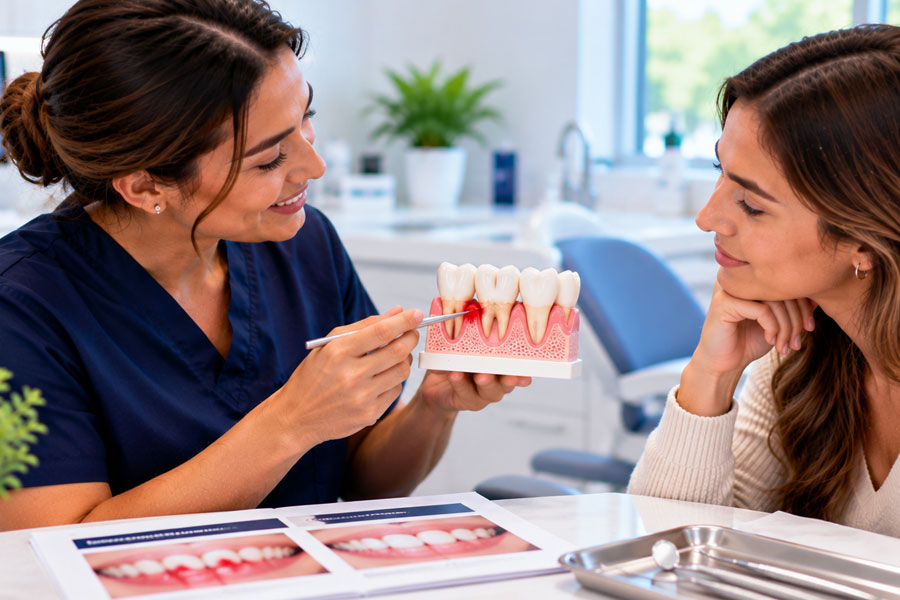
Noticing blood when brushing or flossing shouldn’t be ignored, particularly if it happens regularly. Bleeding gums can sometimes result from brushing too firmly or using a toothbrush that isn’t suitable for your gums, but persistent bleeding can also indicate inflammation or gum disease.
Other symptoms such as redness, swelling, tenderness or changes to the gum line can provide further clues about what’s causing the problem.
At Wise Dental, we can assess your teeth and gums to determine why they’re bleeding and recommend treatment based on the underlying cause.
Healthy gums generally shouldn’t bleed regularly during normal brushing and flossing.
Occasional bleeding may occur following irritation or minor injury, but repeated bleeding can indicate that the gum tissue is inflamed.
Possible causes include:
Because there are several possible causes, a dental examination can help determine whether the bleeding is related to your oral hygiene or requires additional treatment.
Gingivitis is an early stage of gum disease and is one of the most common reasons gums become red, swollen or bleed during brushing.
It primarily affects the gum tissue surrounding the teeth. At this stage, the deeper supporting structures and bone haven’t yet experienced the damage associated with more advanced periodontal disease.
Plaque accumulation around the gum line is a common cause. The bacteria within plaque irritate the gums, resulting in inflammation.
Improving daily brushing and interdental cleaning, together with professional dental cleaning when required, can help manage gingivitis and prevent it from progressing.
When gum disease advances beyond gingivitis, it can develop into periodontitis.
Plaque that isn’t adequately removed can harden into tartar or calculus. As inflammation progresses, the gums can begin pulling away from the teeth, creating deeper spaces or periodontal pockets.
Bacteria can accumulate within these areas and begin affecting the tissues and bone responsible for supporting the teeth.
Without appropriate treatment, periodontitis can lead to:
Treating gum disease before it reaches an advanced stage can help protect the supporting structures around your teeth.
Although gum disease is a common cause, bleeding gums can sometimes be associated with nutritional or medical factors.
Deficiencies involving vitamin C or vitamin K may contribute to abnormal bleeding in some people.
Certain medical conditions affecting blood clotting can also cause gum bleeding. These include conditions such as thrombocytopenia and haemophilia.
If your dentist believes the bleeding may not be primarily dental in origin, you may be advised to speak with your GP or another appropriate healthcare professional.
Certain medications can increase the likelihood of gum bleeding. Blood-thinning medications and some antidepressants are potential contributors.
If you’re taking medication and have noticed changes to your gums, tell your dentist during your appointment.
You shouldn’t stop or change prescribed medication because of gum bleeding unless advised to do so by the healthcare professional responsible for prescribing it.
Several lifestyle and health factors can influence gum health. Additional risk factors include:
These factors don’t necessarily mean you’ll develop gum disease, but they can be considered alongside your oral hygiene and overall dental health when investigating persistent symptoms.
Bleeding isn’t the only symptom associated with gum disease. Arrange a dental assessment if you notice:
Some gum problems can progress without causing significant pain, which is why regular dental examinations remain important even when your teeth feel comfortable.
Treatment depends on what’s causing the bleeding and how far any gum disease has progressed.
For early gingivitis, improving plaque removal can make a significant difference. Your dentist may recommend:
If tartar has accumulated around or beneath the gum line, brushing alone cannot remove it. Professional dental cleaning may therefore be required.
More advanced periodontal disease may require additional treatment to control infection and manage the deeper areas around the teeth.
Seeing blood while flossing can make people reluctant to continue cleaning between their teeth.
However, if plaque-related gingivitis is causing the bleeding, stopping interdental cleaning can allow more plaque to accumulate and potentially worsen the inflammation.
The important thing is to use an appropriate technique without aggressively damaging the gums.
If your gums continue bleeding despite regular brushing and flossing, your dentist can assess the cause and demonstrate suitable cleaning techniques.
Maintaining good plaque control is one of the most important ways to protect your gums.
A consistent oral hygiene routine should include brushing twice daily, cleaning between the teeth and attending dental appointments at intervals appropriate for your oral health.
It’s also important to pay attention to changes in your gums. Persistent bleeding, swelling or recession shouldn’t simply be considered normal.
Early assessment can help determine whether the problem is straightforward gingivitis or a sign of more advanced gum disease.
If your gums regularly bleed when you brush or floss, Wise Dental can help determine what’s causing the problem.
Our Sutherland Shire dental team can examine your gums for signs of gingivitis and periodontal disease, assess plaque and tartar accumulation and recommend treatment based on the condition of your gums.
Whether the bleeding is related to oral hygiene, gum inflammation or another contributing factor, identifying the cause is the first step towards managing it effectively.
Book an appointment with Wise Dental in Sutherland Shire for an assessment of bleeding, swollen or sensitive gums.
Book an Appointment